The Future of AI and What It Means for Work and Business
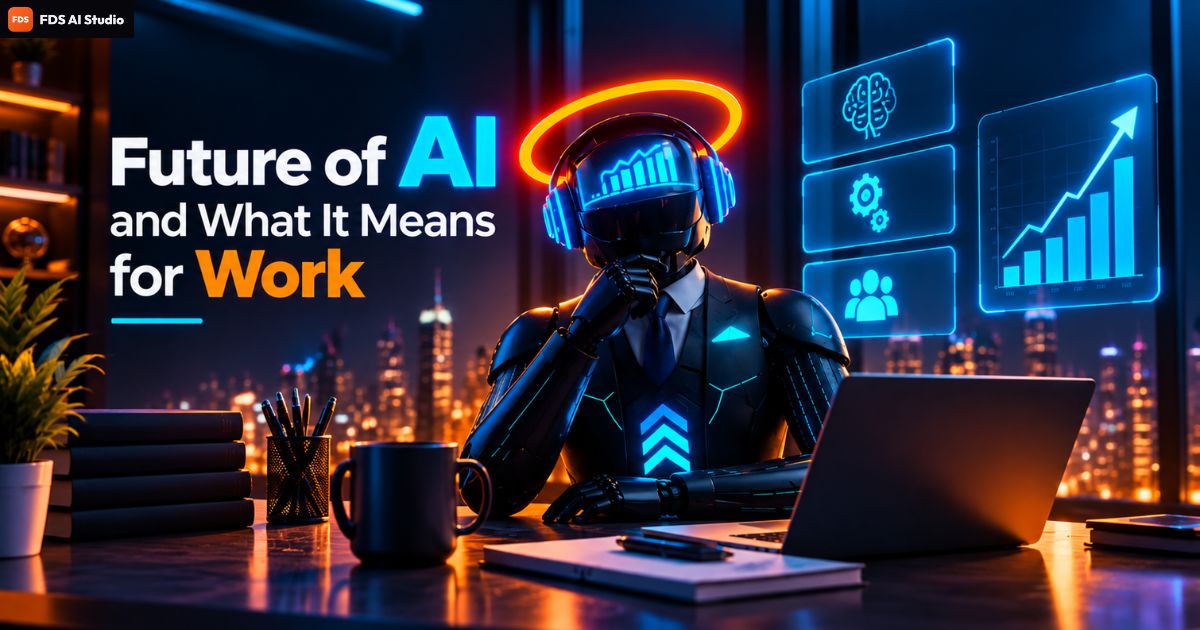
Artificial intelligence is no longer a future concept. It is already part of everyday life, business operations, marketing, customer service, education, design, healthcare, and software development.
But the bigger question is:
What is the future of AI?
The future of AI will not only be about smarter tools. It will be about how people, businesses, and industries use those tools to work faster, make better decisions, reduce repetitive tasks, and create new opportunities.
Over the next decade, AI is expected to become more useful, more accessible, and more deeply connected with daily work. From generative AI and automation to AI agents and ethical regulation, the next phase of artificial intelligence will reshape how businesses operate and how professionals build their careers.
What Is the Future of AI?
The future of AI refers to how artificial intelligence will evolve in the coming years and how it will impact work, industries, technology, and everyday life.
AI is already being used to:
- Write content
- Generate images
- Analyse data
- Automate tasks
- Answer customer questions
- Create videos
- Build software
- Improve decision-making
In the future, AI will become more advanced and more integrated into business workflows.
Instead of being used only as a separate tool, AI will become part of daily systems, apps, platforms, and processes.
Why AI Is Growing So Quickly
Artificial intelligence is growing because businesses want faster, smarter, and more cost-effective ways to work.
AI helps organisations:
- Save time
- Reduce manual effort
- Improve productivity
- Analyse large amounts of data
- Personalise customer experiences
- Create content faster
- Automate repetitive tasks
Generative AI has made artificial intelligence easier for everyday users. Earlier, AI was mostly used by technical teams. Now, writers, designers, marketers, teachers, business owners, and students can use AI tools through simple prompts.
This accessibility is one of the biggest reasons AI is becoming mainstream.
Future of Artificial Intelligence in Business
The future of artificial intelligence in business will focus on practical results.
Businesses will not use AI just because it is new. They will use it because it helps improve performance.
AI will support businesses in areas such as:
- Marketing
- Sales
- Customer support
- Product development
- Data analysis
- HR and hiring
- Finance
- Operations
- Content creation
Companies that use AI properly may become faster, more efficient, and more competitive.
1. Smarter Automation Will Become Normal
Automation is one of the biggest parts of the AI future.
Earlier automation was simple. It followed fixed rules.
For example:
- Send an email after a form is filled
- Generate an invoice after payment
- Schedule a reminder after a task is created
Future AI automation will be more intelligent.
It will be able to:
- Understand context
- Make suggestions
- Analyse user behaviour
- Personalise responses
- Complete multi-step tasks
This means businesses will be able to automate more complex workflows.
For example, an AI system may help a marketing team by researching a topic, creating a campaign outline, drafting content, suggesting creatives, and preparing performance reports.
2. Generative AI Will Become a Daily Work Tool
Generative AI is one of the most visible parts of AI today.
It can create:
- Text
- Images
- Videos
- Code
- Voiceovers
- Presentations
- Reports
- Product ideas
In the future, generative AI will become even more useful for everyday work.
Marketing teams may use it for campaign planning.
Design teams may use it for concept visuals.
Sales teams may use it for personalised outreach.
Customer support teams may use it for faster replies.
Business owners may use it for planning, research, and decision-making.
However, AI-generated output will still need human review. The best results will come from combining AI speed with human judgment.
3. AI Agents Will Change How Work Gets Done
AI agents are expected to become an important part of the next stage of AI evolution.
An AI agent is a system that can perform tasks with less step-by-step instruction from humans.
Instead of only answering a question, an AI agent may be able to:
- Plan a task
- Use tools
- Search information
- Make decisions within limits
- Complete a workflow
- Report results
For example, a future AI agent may help a business by managing routine marketing tasks, checking campaign performance, suggesting changes, and preparing weekly reports.
This does not mean humans will disappear from the process.
It means people will move from doing every small task manually to supervising, guiding, and improving AI-assisted workflows.
4. AI Will Change Jobs, Not Simply Replace Them
One of the biggest concerns about AI is jobs.
Many people ask whether AI will replace human workers.
The realistic answer is that AI will change many jobs.
Some repetitive tasks may become automated, but new roles and responsibilities will also emerge.
Jobs may shift from manual execution to:
- Strategy
- Supervision
- Creative direction
- AI tool management
- Data interpretation
- Quality control
- Customer experience
- Problem-solving
For example, a content writer may not only write from scratch. They may use AI for research, outlines, drafts, and idea generation, then focus on brand voice, accuracy, storytelling, and final editing.
A designer may use AI for concepts, but still guide aesthetics, composition, brand consistency, and final output.
5. Human Skills Will Become More Valuable
As AI handles more repetitive tasks, human skills will become even more important.
The future will reward people who can combine AI knowledge with human judgment.
Important skills will include:
- Critical thinking
- Creativity
- Communication
- Emotional intelligence
- Problem-solving
- Strategy
- Decision-making
- Prompt writing
- AI workflow planning
AI can generate options, but humans must decide what is useful, ethical, accurate, and aligned with business goals.
This means AI will not remove the need for human talent. It will change what kind of human talent is most valuable.
Future AI Technology in Marketing
Marketing is one of the industries where AI will have a major impact.
AI will help marketers with:
- Audience research
- Content planning
- SEO content
- Ad copy
- Video scripts
- Creative testing
- Customer segmentation
- Campaign analysis
- Performance optimisation
The future of AI in marketing will be about speed and personalisation.
Brands will be able to create more campaign variations and test them faster.
For example, a business may create different ad copies for different customer groups, analyse which performs best, and improve campaigns quickly.
At FDS AI Studio, AI-driven creative and marketing workflows can help brands improve content production, campaign planning, and digital execution.
Future of AI in Small Businesses
AI will not only help large companies. Small businesses will also benefit.
Small businesses may use AI for:
- Social media captions
- Customer replies
- Product descriptions
- Business planning
- Lead generation
- Email marketing
- Data analysis
- Design ideas
This will make professional-level tools more accessible.
A small business that cannot hire a large marketing team may still use AI tools to improve productivity and content quality.
However, businesses should avoid using AI blindly. Strategy, brand understanding, and customer knowledge will still be necessary.
AI Predictions for the Next Decade
The next decade of AI may bring major changes in how people work and live.
Here are some likely AI predictions.
1. AI Will Be Built Into More Tools
AI will become a default feature in software, apps, phones, websites, and business platforms.
People may use AI without even thinking of it as a separate tool.
2. AI Will Make Workflows Faster
Routine tasks like writing drafts, analysing reports, summarising meetings, and preparing documents will become faster.
3. AI Agents Will Handle Multi-Step Tasks
Instead of only giving answers, AI systems may complete more complex tasks across different tools.
4. Personalised AI Assistants Will Become Common
Professionals may use AI assistants that understand their work style, preferences, tasks, and goals.
5. AI Regulation Will Increase
As AI becomes more powerful, governments and organisations will focus more on regulation, privacy, safety, and ethics.
6. AI Skills Will Become Important for Careers
Knowing how to use AI tools effectively may become a basic professional skill, similar to knowing how to use the internet or office software.
AI and Ethics: Why Responsible Use Matters
The future of AI must also include responsible use.
Important concerns include:
- Data privacy
- Bias
- Misinformation
- Job displacement
- Copyright issues
- Transparency
- Security
Businesses using AI should be clear about how they use data and how AI-generated content is reviewed.
Responsible AI use means combining innovation with caution.
AI should support better decisions, not create confusion or risk.
How Businesses Should Prepare for the Future of AI
Businesses that want to stay ahead should start preparing now.
1. Train Teams to Use AI
Employees should understand how AI works and where it can help.
2. Start With Simple Use Cases
Businesses can begin with tasks like content drafts, reports, customer support, and workflow automation.
3. Create AI Guidelines
Companies should define how AI can be used safely and responsibly.
4. Combine AI With Human Review
AI output should be checked for accuracy, tone, quality, and brand fit.
5. Keep Learning
AI technology will continue to evolve, so businesses need continuous learning and experimentation.
Will AI Replace Human Creativity?
AI can support creativity, but it does not fully replace human imagination.
AI can generate ideas quickly, but humans understand emotion, culture, brand identity, and real-life context better.
The future of creativity will likely be human plus AI.
AI will help with:
- Drafting
- Ideation
- Visual exploration
- Script generation
- Variation testing
Humans will guide:
- Storytelling
- Taste
- Strategy
- Emotion
- Brand voice
- Final judgment
The best creative work will come from people who know how to use AI without losing human originality.
Final Thoughts
The future of AI will shape the way people work, create, learn, and run businesses.
AI will bring smarter automation, faster content creation, better data analysis, and new forms of digital support. It will also raise important questions about jobs, ethics, privacy, and responsibility.
For businesses, the future is not about replacing people with AI. It is about helping people work better with AI.
The companies and professionals who succeed will be those who learn how to combine:
- Human creativity
- AI productivity
- Strong strategy
- Responsible use
- Continuous learning
AI is not just a technology trend. It is becoming a major part of the future of work and business.