SEO in Digital Marketing: Why It Is Still the Highest-ROI Channel in 2026
Digital marketing has changed dramatically.
Businesses today have more channels than ever:
- Paid advertising
- Social media marketing
- Email campaigns
- Influencer marketing
- Content marketing
- Search optimisation
But one question continues to come up:
Is SEO still worth investing in 2026 when search behaviour is changing because of AI?
The answer is yes.
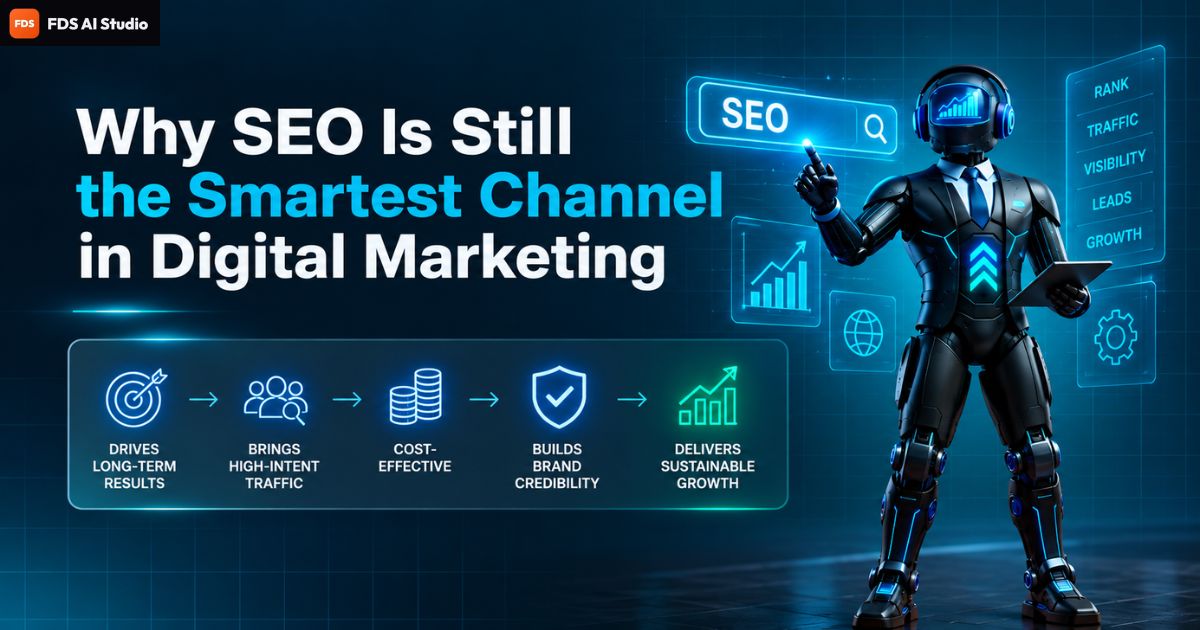
SEO remains one of the most valuable digital marketing channels because it creates long-term visibility, builds authority, and continues generating organic traffic even after the initial investment.
Unlike paid advertising, where visibility stops when the budget stops, SEO creates a compounding effect.
A well-optimised website can continue attracting:
- Potential customers
- Search traffic
- Brand visibility
- Qualified leads
for months and years.
However, SEO in 2026 is no longer only about ranking on Google.
Modern SEO now includes:
- AI Overviews
- Conversational search
- Search intent optimisation
- E-E-A-T signals
- Structured content
- GEO (Generative Engine Optimisation)
This guide explains how SEO fits into a complete digital marketing strategy and why businesses should still prioritise it.
What Is SEO in Digital Marketing?
SEO (Search Engine Optimisation) is the process of improving a website and its content to increase visibility in search engine results.
The goal is to help search engines understand:
- What your business offers
- Which topics you are an authority on
- Which users should find your content
SEO helps businesses appear when customers search for solutions.
For example:
A person searching:
“best digital marketing agency in India”
is already showing interest in a service.
A business ranking for that search has a chance to attract a high-intent customer.
This is why SEO is considered a powerful customer acquisition channel.
Why SEO Still Matters in 2026
Many marketers believe AI search will reduce the importance of SEO.
The reality is different.
Search is evolving, not disappearing.
People are still looking for:
- Information
- Solutions
- Products
- Services
- Recommendations
The difference is how answers are being delivered.
Modern search includes:
- Traditional Google results
- AI-generated answers
- Voice search
- Conversational queries
Brands that invest in SEO are better positioned to appear across these discovery channels.
SEO vs Paid Ads: Why SEO Has Long-Term Value
Paid advertising can generate immediate traffic.
For example:
You spend money on Google Ads or Meta Ads → users see your advertisement.
But when the budget stops:
- Traffic decreases
- Leads reduce
- Visibility disappears
SEO works differently.
A strong SEO strategy builds digital assets:
- Optimised pages
- Helpful content
- Website authority
- Search visibility
These assets continue working over time.
SEO and Paid Marketing: Why They Work Better Together
Many businesses treat SEO and paid advertising as separate channels.
A stronger approach combines both.
Paid Ads Provide:
- Immediate visibility
- Quick testing
- Fast customer acquisition
SEO Provides:
- Long-term traffic
- Brand authority
- Lower acquisition cost over time
For example:
A business can use Google Ads to identify high-performing keywords.
Then it can create SEO content around those keywords to build long-term organic visibility.
This creates a stronger marketing ecosystem.
How SEO Works in Digital Marketing
SEO involves multiple areas working together.
The main components include:
- Keyword research
- On-page SEO
- Technical SEO
- Off-page SEO
- Content strategy
- Local SEO
- Authority building
1. Keyword Research: Understanding Customer Intent
Keyword research is the foundation of SEO.
It helps businesses understand what customers are searching for.
Modern keyword research focuses on:
- Search volume
- Competition
- User intent
- Buying stage
- Business relevance
A good SEO strategy does not only target high-volume keywords.
It targets keywords that bring the right audience.
For example:
“digital marketing”
and
“hire digital marketing agency for real estate business”
have different intentions.
The second search shows stronger buying intent.
2. On-Page SEO: Optimising Your Website Content
On-page SEO focuses on improving elements within your website.
This includes:
- Page titles
- Meta descriptions
- Headings
- Content structure
- Internal links
- Keyword placement
- Image optimisation
A well-optimised page helps both users and search engines understand the content better.
3. Technical SEO: Building a Strong Website Foundation
Technical SEO focuses on website performance and accessibility.
Important factors include:
- Page speed
- Mobile optimisation
- Core Web Vitals
- Website structure
- Indexing
- Structured data
A beautiful website cannot perform well if search engines cannot properly understand it.
4. Content Strategy: Building Search Authority
Content remains one of the strongest parts of SEO.
A successful content strategy focuses on:
- Answering customer questions
- Creating useful resources
- Building topical authority
- Covering important industry topics
Modern SEO is moving away from creating random blogs.
The focus is now:
Create the most useful answer for the user's problem.
5. Off-Page SEO and Backlink Building
Search engines consider external signals when evaluating authority.
Off-page SEO includes:
- Backlink building
- Brand mentions
- Digital PR
- Industry recognition
Quality matters more than quantity.
A few relevant, trustworthy links can be more valuable than many low-quality links.
6. Local SEO for Indian Businesses
For local businesses, SEO is especially valuable.
Local SEO helps businesses appear for searches like:
- Near me searches
- Local services
- Location-based queries
Important local SEO activities include:
- Google Business Profile optimisation
- Customer reviews
- Local content
- Location pages
This is especially useful for:
- Clinics
- Restaurants
- Service businesses
- Retail stores
SEO in the Age of AI Overviews
Search behaviour is changing.
Google and other platforms are increasingly using AI-generated answers.
This means businesses need to optimise not only for rankings but also for being recognised as trustworthy sources.
Modern SEO strategies focus on:
E-E-A-T
Experience, Expertise, Authority, and Trust.
Search engines increasingly value content created by knowledgeable sources.
Structured Content
AI systems understand content better when it is organised clearly.
Useful formats include:
- FAQs
- Step-by-step guides
- Comparisons
- Clear headings
GEO (Generative Engine Optimisation)
GEO focuses on improving visibility in AI-generated search responses.
It involves:
- Creating authoritative content
- Answering specific questions
- Building topical relevance
SEO is expanding beyond traditional search rankings.
Why SEO Has the Highest ROI Potential
SEO requires investment in:
- Content
- Strategy
- Optimisation
- Technical improvements
But over time, it can reduce dependence on paid traffic.
The benefits include:
1. Continuous Visibility
A ranking page can continue attracting visitors.
2. Higher Intent Traffic
Organic search users often actively look for solutions.
3. Brand Authority
Consistent search presence builds trust.
4. Lower Customer Acquisition Cost
Over time, organic traffic can reduce dependence on paid acquisition.
Common SEO Mistakes Businesses Make
1. Writing Only for Search Engines
Content should first help people.
Search engines reward useful information.
2. Targeting Only High-Volume Keywords
High-volume keywords often have intense competition.
A better strategy includes:
- Long-tail keywords
- Commercial keywords
- Industry-specific searches
3. Ignoring Technical SEO
Great content cannot perform if the website has technical problems.
4. Creating Content Without Strategy
Random blogs rarely create meaningful growth.
Content should connect with:
- Customer journey
- Business goals
- Search intent
5. Expecting Immediate Results
SEO is a long-term channel.
Unlike ads, it compounds over time.
How Businesses Should Combine SEO With Digital Marketing
A strong digital marketing strategy combines multiple channels.
A complete approach can include:
SEO
For long-term organic growth.
Paid Advertising
For immediate visibility and testing.
Content Marketing
For authority and education.
Social Media
For engagement and brand awareness.
Email Marketing
For nurturing leads.
The strongest brands do not depend on one channel.
They build connected marketing systems.
How FDS AI Studio Approaches SEO and Digital Marketing
Modern businesses need SEO strategies that adapt to changing search behaviour.
FDS AI Studio focuses on combining:
- SEO strategy
- Content systems
- AI-powered workflows
- Performance marketing
- Data-driven optimisation
The goal is not just ranking keywords.
It is building digital visibility that supports business growth.
Explore more insights on SEO, AI marketing, and digital growth through the FDS AI Studio blog
Final Thoughts
SEO remains one of the smartest investments in digital marketing because it creates lasting visibility.
In 2026, successful SEO is no longer only about ranking on Google.
It is about becoming a trusted source across:
- Search engines
- AI Overviews
- Conversational search
- Digital discovery platforms
The businesses that win will combine:
SEO + Content + AI + Performance Marketing
SEO is not disappearing.
It is becoming a more intelligent and strategic growth channel for businesses that want sustainable results.
Frequently asked
What is SEO in digital marketing?
Is SEO still important in 2026?
How does SEO help businesses?
What are the main types of SEO?
On-page SEO
Technical SEO
Off-page SEO
Local SEO